Distillation is a process of evaporation and condensation, in which the vapor generated by the boiling of a liquid is introduced into a condenser tube to cool and condense into a liquid. Do you know the principle of distillation? Today, let's talk about the principle of distillation
An analysis was conducted using the separation of two-component mixtures as an example. After heating, the raw material liquid partially vaporizes, and the volatile components are concentrated in the steam, while the highly non-volatile components are produced in the remaining liquid, achieving a certain degree of separation between the two.
The greater the difference in volatilization between the two substances, the greater the concentration of the two substances mentioned above. Industrial distillation equipment is used to directly contact partially evaporated liquid phase with partially condensed gas phase, thereby achieving partial evaporation of liquid phase and partial condensation of gas phase, that is, partial evaporation of gas phase and partial condensation of gas phase. In order to achieve partial evaporation of gas phase and partial condensation of gas phase
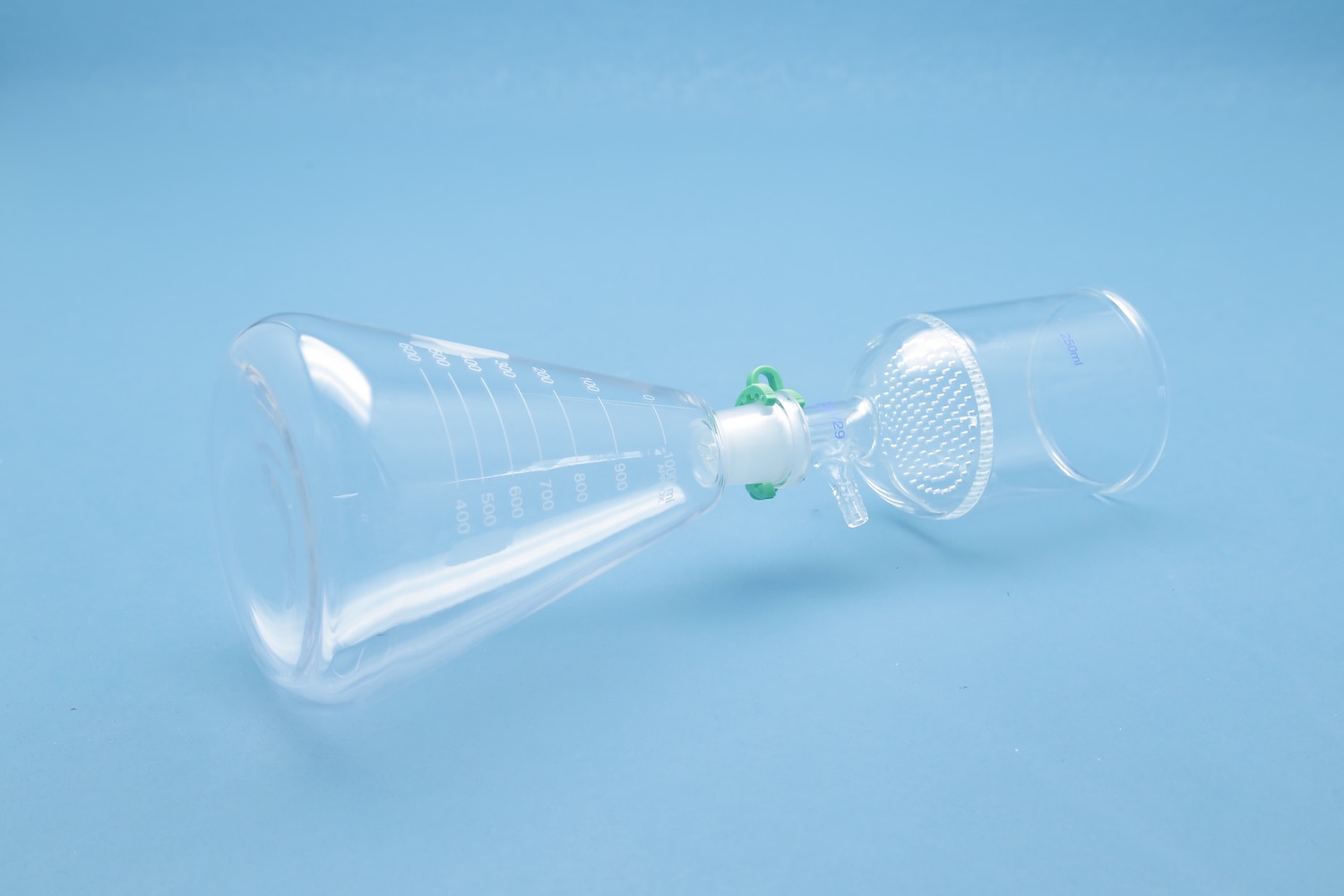
Due to molecular motion, liquid molecules tend to overflow from the surface. This trend increases with the rise of temperature. When a liquid is placed in a closed vacuum system, liquid molecules will continuously overflow and form vapor on the surface of the liquid. Then the molecules escape from the steam, and then the molecules escape back into the liquid from the steam, and the steam will maintain a certain pressure. At this point, the liquid surface reaches saturation, which is called saturated vapor.
The pressure applied to the surface of a liquid is called saturated vapor pressure. The results indicate that the saturated vapor pressure of a liquid is only temperature dependent, meaning that the liquid has a certain vapor pressure at a certain temperature. It refers to the pressure at which a liquid is in equilibrium with its vapor, regardless of the amount of liquid and vapor in the system
Heat the liquid until it boils, convert it into steam, and then cool and condense the steam into liquid. The combined operation of these two processes is called distillation. Obviously, distillation can separate volatile and non-volatile substances, as well as mixed liquids with different boiling points. However, in order to achieve good separation efficiency, the boiling points of each component in the mixture must be very different (at least above 30 ℃).
In atmospheric distillation, since the atmospheric pressure is usually not completely 0.1 MPa, strictly speaking, the boiling point should be observed plus a correction value. However, due to the usually very small deviation, even if the difference between atmospheric pressure and atmospheric pressure is 2.7kPa, the correction value is only about ± 1 ℃, so it can be ignored.



Official Mall Entrance
 苏公网安备 32092502000571号